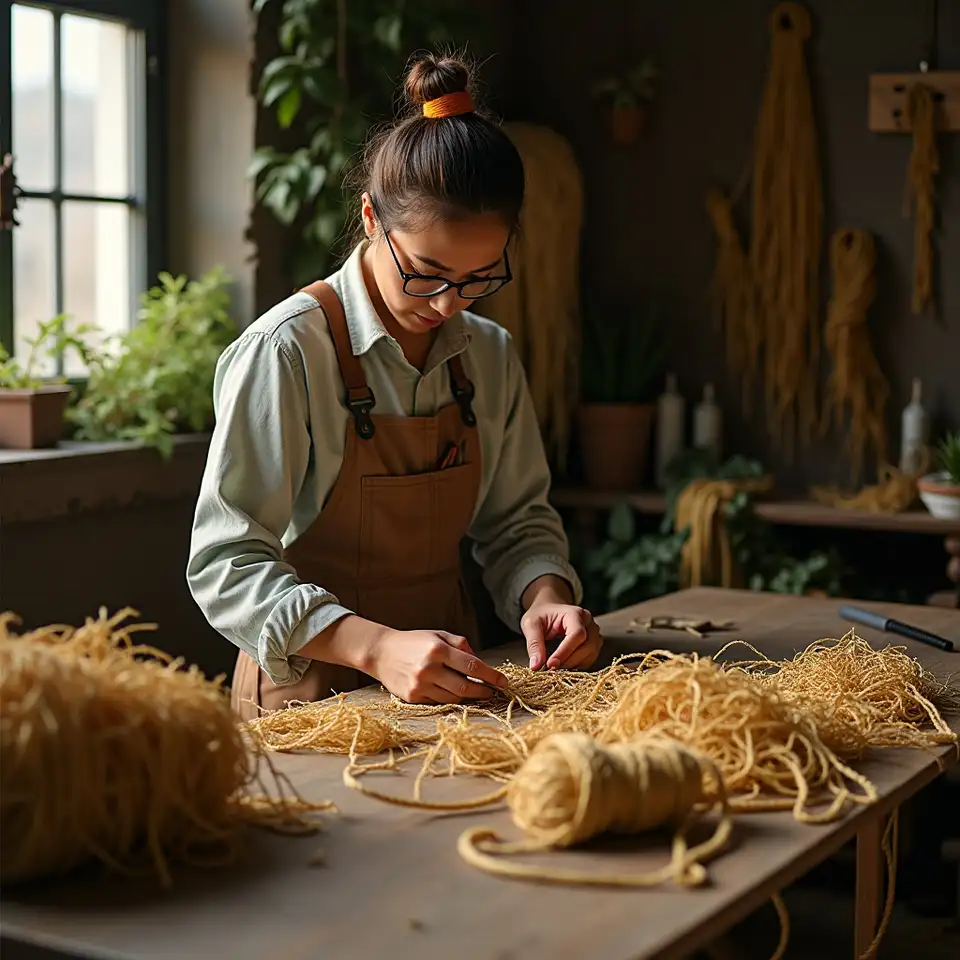
Your cordage learning path
Five stages transform complete beginners into confident fiber makers. Each step builds on the last, with clear milestones you can feel in your hands.
Identify nettle stands
Learn to spot mature stinging nettles at peak fiber season, distinguish them from lookalike plants, and choose harvesting locations that respect both the plant and the land where it grows.
Harvest safely
Gather stalks using proper protective gear and techniques that leave the stand healthy for future growth. Timing matters: late summer to early autumn yields the strongest golden bast fibers.
Process fibers
Ret stalks in water to loosen the outer bark, then dry, crush, and scrape away the woody core. This patient preparation transforms tough stalks into silky, twistable fiber ready for cordage.
Twist basic cord
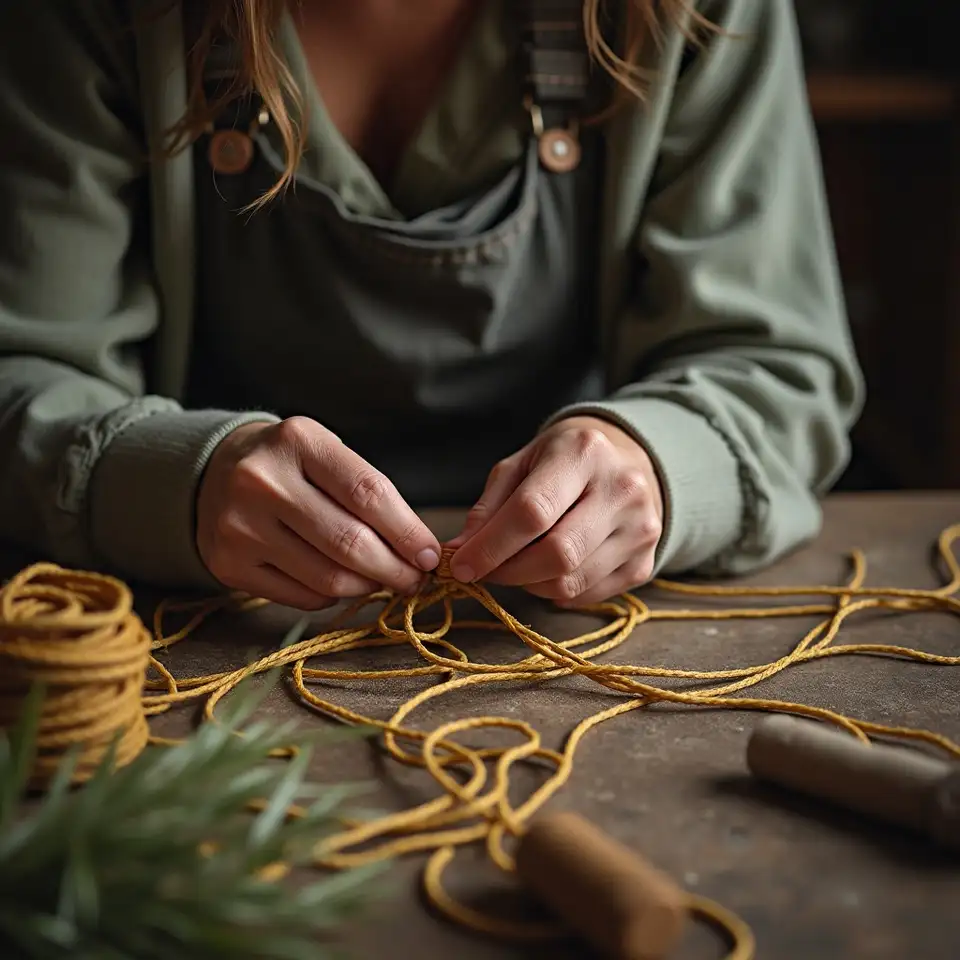
Master the ancient two-ply reverse-wrap technique that creates rope tightening under tension rather than loosening. Practice with short lengths until the motion becomes automatic and rhythmic.
Finish projects
Apply your cordage to practical uses like garden ties, drawstrings, or decorative bindings. Each project teaches something new about fiber behavior, tension, and the satisfying utility of handmade rope.
Marketing cookies
Used to deliver relevant content and measure the effectiveness of our outreach.